
Company
introduction
introduction
Dongsung pharmaceutical with 60 years of history provides customer oriented total services and future oriented marketing which covers cosmetics and finished medicine.


| Product name | : | Prond Tab. |
|---|---|---|
| Product division | : | ETC drug |
| Classification group | : | Steroid |
| Insurance code | : | 643201210 |
| Efficacy and effect | : | 1. Endocrine disorder: Pr.. |
Basic information
-

- Appearance
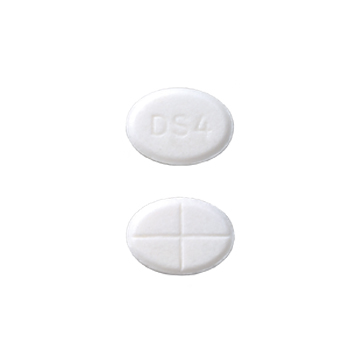
- White oval tablet
-

- DOSAGE AND ADMINISTRATION
-
1. Initial dosecan vary from 4 mg to 38 mg daily as methylprednisolone based on symptom of certain disease. If not severe, low-dose is enough, but eraly high-dose treatment may be necessary in special patients. Initial dose must be sustained or regulated until satisfactory response is acquired. If there is no satisfactory clinical ourcome after fair amount of time, treatment must be ceased and be converted to other appropriate treatment. It is important to set dose individually based on treating disease and response of patient. After appropriate response is achieved, initial dose is decreased in appropriate intervals until it becomes the minimum dose to sustain adequate clinical response to determine adequate maintenance dose. Consistent monitoring is necessary for dose. If it affects patient's status under stressful environment that has no direct influence with disease progression, individual response of patient to drug, and symptoms of treating disease, dose adjustment may be required. In the latter situation, dose may be increased for satisfactory preiod of time. After long-term treatment, gradual decrease is recommended.
2. Multiple sclerosis
As for treatment of acute deterioration of multiple sclerosis, after treating with 200mg prednisolone daily for a week, treating with 80mg of prednisolone every other day is effective (4mg of methylprednisolone is 5mg of prednisolone).
3. ADT(Alternate Day Therapy)
ADT is a method of administering twice the daily dosage on the morning of every other day. The purpose of this method is to increase effect of corticoid for patient who requires longterm administeration, and minimize side effects such as pituitary gland-adrenal gland suppression, Cushingoid state, corticoid withdrawak and growth stunt in child. Basis for such treatmemt plan is based on 2 following premises.
1)Anti-inflammatory and therapeutic effect of corticoid last longer than physical existence and metabolic influence
2) Taking corticoid in the morning every other day brings reformation of normal Hypothalamus-pituitary-adrenal (HPA) activation on the day of no-administration. Brief abstract on HPA physiology can help understanding of such theoretical analysis. As free cortisol mainly acts via hypothalamus, decrease in free cortisol stimulates pituitary gland and facilitates adrenocorticotropic hormone (ACTH), whereas its increase depresses ACTH secretion. Normally, HPA system is characterized by 24-hour cycle. Serum ACTH level is increased to its fullest in 6 AM from low level in 10 PM. Increase in ACTH의 stimulates adrenal cortex activation, making serum cortisol rise to maximum between 2-8 AM. Such increase of cortisol decreases ACTH production, and also, adrenal cortex synthesis. This gradually decreases serum corticoid during the day, which reaches to its lowest during night. 24-hour rhythm cycle of HPA disappears in Cushing's disease, these are the symptoms of adrenal cortex hyperactivity characterized by central obesity, easily bruising skin, weakness, decreased muscle mass, hypertension, latent diabetes, osteoporosis, electrolyte imbalance. Identical clinical symptoms of hyperadrenocorticoism can occur during conventional long-term corticoid medication with divided medication. In such event, confusion in day rhythm due to maintenance of high corticoid level elevated during night may have played a critical role in expression of corticoid side effect. Getting out of consistently elevated serum level for just a brief time may be helpful. During corticoid medication with typical medication level, cortisol synthesis by cortical cortex is suppressed as well as ACTH production. Recovery period into normal HPA varies depending on dosage and treatment period. During the period, the patient becomes sensitive any stress-inducing environment. Though single prednisolone (10mg) administration in the morning may show comparatively less adrenal suppression than dividing it into four times with 6 hours apart, there is evidence that some suppression to adrenal activation from usage of pharmacological dose persists to next day. Furthermore, single administration of some corticoid may show adrenal cortex suppression of 2 days or more. Other corticoid including methylprednisolone, hydrocortisone, prednisone, prednisolone is presumed to be short-acting (adrenal cortex suppression for 1¼ to 1½ days with single administration) and therefore ADT treatment is recommended.
Following must be reminded in ADT.
1) In corticoid treatment, basic principle and indication must be applied. Strength of ADT must not facilitate reckless usage of corticoid.
2) ADT is a treatment that must be planned primarily for patient requiring long-term corticoid treatment.
3) As for less-severe disease with indication of corticoid treatment, ADT may be used in early stage. In more severe disease, high-dose treatment that divides daily dosage will be commonly recommended for early control of disease progression. Early suppression dosage must be continued until satisfactory clinical response is achieved, and in many allergic and collagen disease, it takes from 4 days to 10 days.
Especially when intending for consistent use of ADT, it is crucial to keep short initial suppression dose period. If control is accomplished, two plans are possible.
① Convert to ADT and gradually decrease corticosteroid given ADT.
② Decrease daily dose of corticoid to minimum effective dose as soon as possible according to control of disease progression and convert it into ADT. Theoretically, process ① is more plausible.
4) Due to advantage of ADT, such form of treatment is suitable for patient who has taken corticoid daily for a long period (e.g. rheumatoid arthritis). Such patient may already have suppressed HPA axis, so establishing ADT can be difficult and is not successful every time. However, regular attempts of conversion are recommended. In face of difficulty, it is plausible to administer 3 or even 4 times the dose than double of the daily dose. If the patient is controlled, attempts to decrease it into minimum are to be made.
5) As mentioned before, some corticoids suppress adrenal function for a long time, therefore they are not recommended for ADT (e.g. dexamethasone, betamethasone).
6) Maximum activation of adrenal cortex is 2 to 8 AM and the minimum, 4 PM to 0 AM. When administered in time of maximum activation (morning), extrinsic corticoid suppresses adrenal cortex activation the least.
7) In ADT, as in all treatment environments, customizing treatment for each patient and giving appropriate treatment is crucial. For all patients, perfect regulation of symptoms is impossible. Explanation on advantage of ADT can help patient to understand and bear unstable symptoms that may occur later part of the day without corticosteroid. If necessary, other symptomatic treatment may be added or supplemented during the period.
8) If acute exacerbation occurs, returning back to daily-corticoid treatment may be necessary for control of the symptoms. After the symptoms are controlled, the patient can be attempted to return to established ADT.
9) Many side effects of corticoid therapy can be minimized with ADT, but as in all situations, doctor must utterly contemplate the risk and benefit for each patient who are considered for corticoid treatment.
-

- Ingredient / content
-
per 1 tablet
- Methylprednisolone 4.0mg
-

- standard
- 200 tablet
-

- How to Save
- Airtight container, Stored at room temperature(1~30℃)
-

- Period of use
- 36 months from manufacture date
-

- Efficacy and effect
-
1. Endocrine disorder: Primary and secondary adrenocortical insufficiency(Hydrocortisone or cortisone is primary drug, but if necessary, synthetic corticoid can be used with mineral corticoid. Especially in infant, it is crucial to use mineral corticosteroid), Congenital adrenal hyperplasia, hypercalcemia accompanied in cancer, Non-purulent thyroiditis
2. Rheumatoid disorder
Short-term administration treatment to prevent acute progression or deterioration used in following diseases: post-traumatic osteoarthritis, synovitis of osteoarthritis, rheumatoid arthritis, and rheumatoid arthritis including juvenile rheumatoid arthritis (in some cases, low-dose maintenance therapy may be required), Acute and subacute bursitis, epicondylitis, acute nonspecific tenosynovitis, acute gouty arthritis, psoriatic arthritis, ankylosing spondylitis
3. Collagen disease
Disease that is deteriorating or requires maintenance treatment: Systemic lupus erythematosus (systemic lupus nephritis), systemic dermatomyositis (multiple myositis), acute rheumatoid carditis
4. Skin disease: Pemphigus, severe polymorphic erythema (Stevens-Johnson syndrome), exfoliating dermatitis, herpes zoster dermatitis, severe seborrheic dermatitis, severe psoriasis, bacterial sarcoma
5. Allergic disease
Severe or incapability-inducing allergic disease that shows no response with general treatment: Bronchial asthma, contact dermatitis, atopic dermatitis, serum disease, seasonal or multi-annual allergic rhinitis, drug hypersensitivity reaction
6. Optical disease
Severe acute-chronic allergic or inflammatory disease that is related to eye and its subsidiary organs: Conjunctival herpes, iritis and iridocyclitis, chorioretinitis, posterior focal uveitis and choroiditis, Optic neuritis, sympathetic eye inflammation, anterior inflammation, allergic conjunctivitis, allergic keratitis, keratitis
7. Gastrointestinal disease
Following diseases that faces critical moments: Ulcerative colitis, regional enteritis
8. Respiratory disease: Symptomatic sarcoidosis, beryllium intoxication, pulmonary tuberculosis with fulminant or disseminated disease (combined with appropriate antituberculous chemotherapy), Loebler syndrome not resolved by other methods, aspiration pneumonia
9. Hemopoietic disease: Acquired (autoimmune) hemolytic anemia, adult idiopathic thrombocytopenic purpura, secondary thrombocytopenia in adults, erythroblastopenia (red blood cell anemia), congenital dyserythropoietic anemia
10. Malignant tumor
Palliative treatment of following disease: Acute leukemia in child, leukemia and lymphoma in adult
11. Edematous disease: Induction of urination and alleviation of proteinuria in idiopathic nephrotic syndrome with no uremia or nephrotic syndrome due to SLE
12. Neurologic disease: Acute deterioration of multiple sclerosis
13. Other: Tuberculous meningitis (in case of obstruction or obstruction of the subarachnoid space, treated in combination with appropriate anti-tuberculosis chemotherapy),Trichinosis (accompanied by neurogenic or myocardial complications)

DONGSUNG BIO PHARM SNS


